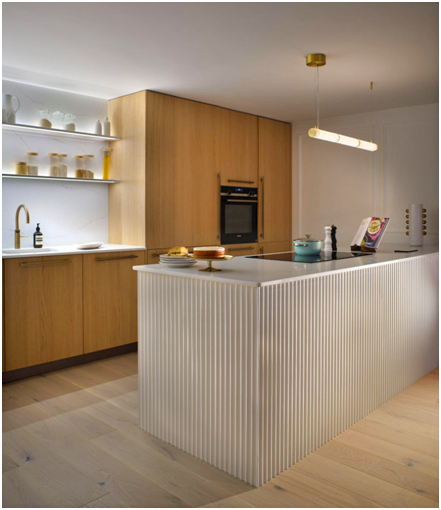
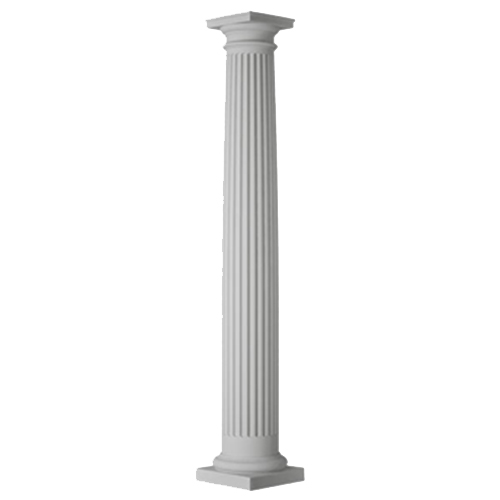
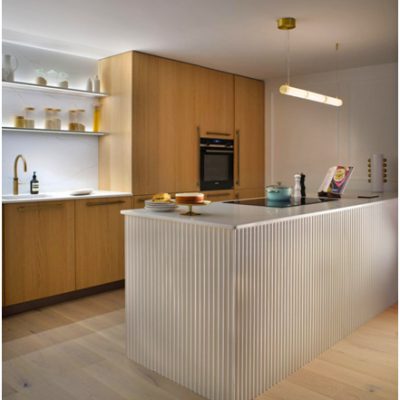
A fluted edge is one of my go-to’s for adding interest without overwhelming a space. Fluting refers to a series of vertical grooves carved into a surface – traditionally seen in classical architecture (imagine those grand columns in Ancient Greece), but nowadays we use them in a more contemporary way.
Fluted edges carved into a Ancient Greek Doric column
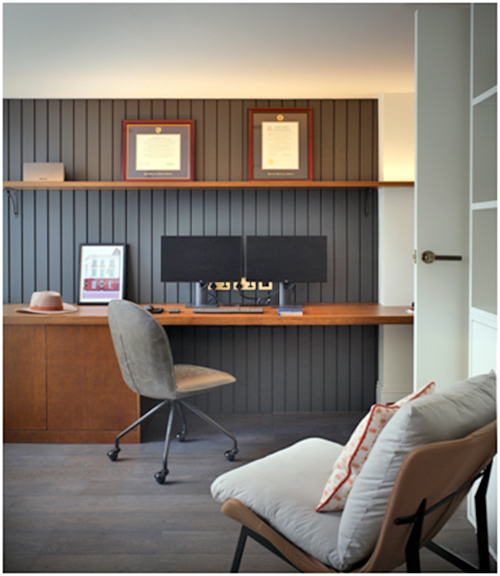
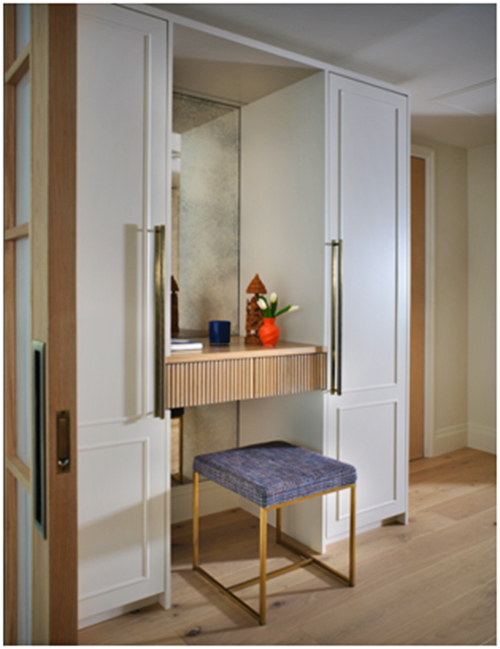
What I love about fluted detailing is its subtlety. It works with light and shadow, so the fluting even morphs and changes throughout the day. With the addition of fluting, the simplest cupboard or panel suddenly has presence. And we’ve found that this is especially effective in spaces that don’t usually draw attention to themselves.
Photo courtesy of Cigal Kaplan Interiors
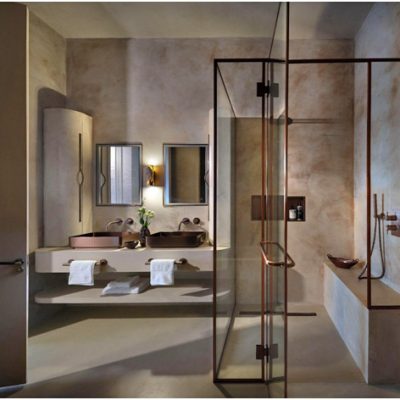
For us, good interiors are about layers. Layers of material, layers of texture, layers of detail. The more thoughtfully layered a home is, the more comfortable and inviting it feels. Crucially, a fluted edge suggests that someone has thought about how a space feels when you live within it. Fluting works beautifully elsewhere: kitchen islands, bathroom vanities, bedside tables, wardrobes. Fluted edges slow the eye down (even if you’re rushing in through the front door, drenched in rain). They invite you to notice the design: and to enjoy it for the beauty and craftsmanship which went into it.